Tractor Engine Overheating: Causes, Warning Signs & What To Do
A tractor that is running too hot is a tractor that is heading toward serious engine damage, and the window between the first warning sign and an expensive repair bill can be shorter than most owners expect. In Grafton and the surrounding Clarence Valley, summer workloads are heavy and high ambient temperatures make thermal management more demanding. A cooling system that copes adequately in cooler months can struggle when ambient temperatures are high, and the machine is working hard through the hottest part of the day. This post covers the most common causes of tractor overheating, the early warning signs to watch for and why stopping work and seeking professional inspection is the right response when the temperature gauge climbs.
Why Overheating Damages Engines
Before getting into causes, it is worth being clear about what is at stake. A tractor engine operating above its designed temperature range is not simply uncomfortable for the machine. Sustained overheating causes cylinder head warping, blown head gaskets, damaged pistons, glazed cylinder walls and, in serious cases, complete engine seizure. These are not cheap repairs. A warped head or a seized engine on a working tractor can mean weeks off the job and a repair bill that dwarfs what a prompt cooling system inspection would have cost. Running a hot tractor in the hope that it cools down is rarely the right call.
The Most Common Causes of Tractor Overheating
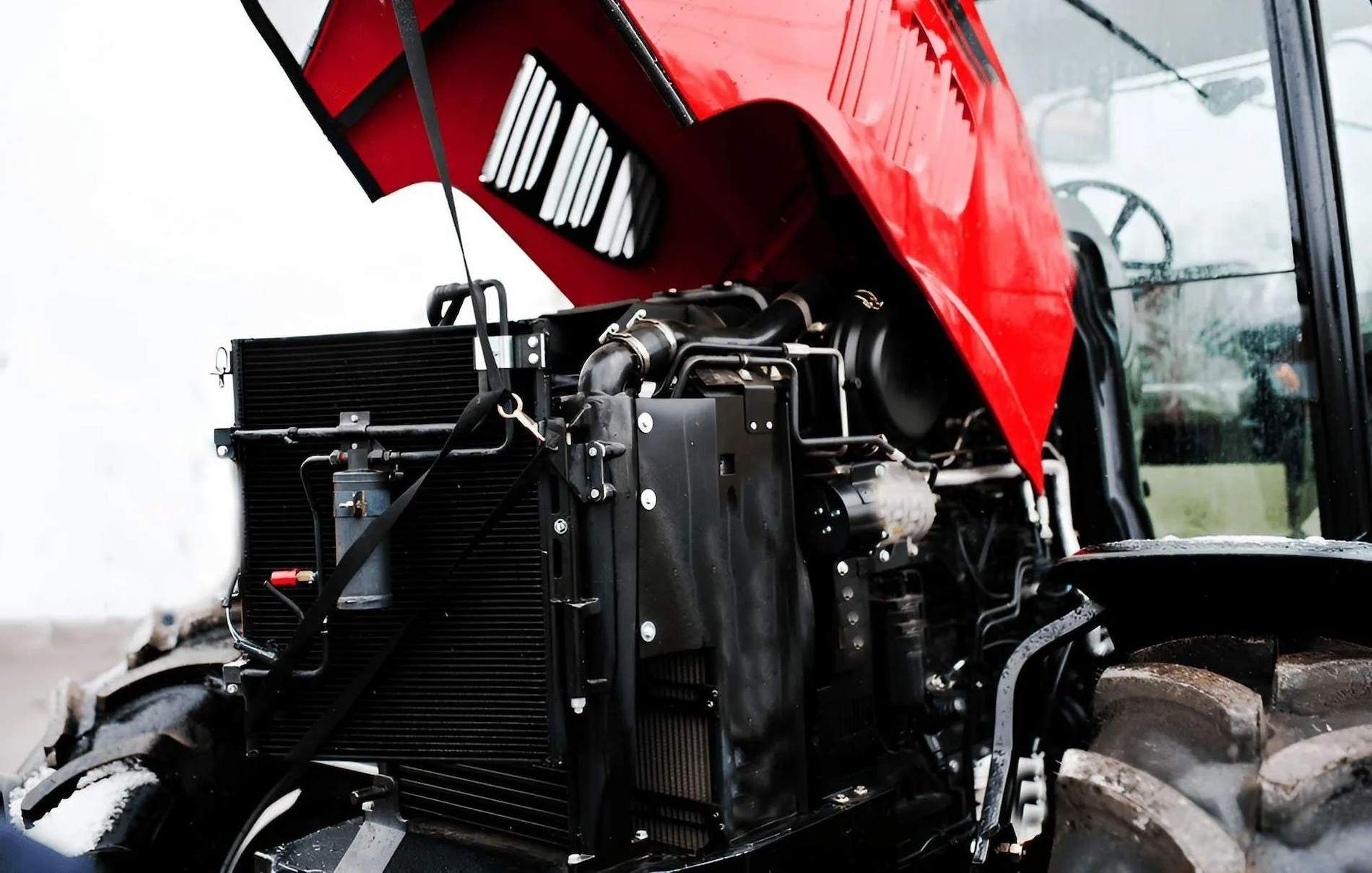
Most overheating problems trace back to the cooling system. The system is designed to manage heat continuously under load, and when any part of it fails or degrades, the whole system's capacity drops. Here are the causes that a qualified mechanic sees most often.
Blocked or Dirty Radiator
The radiator dissipates heat by passing coolant through a network of fine tubes and fins while air flows through from the front. In farm environments, those fins collect dust, chaff, grass clippings, mud and debris rapidly. A radiator that is partially blocked by debris cannot pass air efficiently, and the coolant returning to the engine is warmer than it should be. This is one of the most common tractor cooling system problems and one of the most straightforward to prevent with regular cleaning. A radiator that has been neglected for a season may also have internal scale and mineral deposit build-up that reduces flow capacity, which requires more than external cleaning to address.
Low or Old Coolant
Coolant does two jobs: it transfers heat from the engine to the radiator and it contains additives that prevent corrosion, cavitation and scale build-up within the cooling circuit. Over time, those additives degrade. Old coolant that has not been replaced on schedule loses its protective properties and becomes more corrosive, damaging hoses, the water pump and the radiator internally. Low coolant level reduces the system's heat-carrying capacity directly. Both conditions lead to the engine running hotter than it should. Checking coolant level and condition as part of seasonal maintenance is straightforward and often overlooked.
Faulty Thermostat
The thermostat regulates coolant flow between the engine and the radiator based on temperature. When the engine is cold, the thermostat restricts flow to allow the engine to warm up quickly. Once operating temperature is reached, it opens to allow full flow through the radiator. A thermostat that sticks closed keeps coolant from reaching the radiator regardless of engine temperature, causing rapid overheating. A thermostat that fails open causes the engine to run too cool, which creates its own problems. Thermostat failure is a common and inexpensive repair when caught early, and a significant contributing factor to farm tractor overheating when missed.
Failing Water Pump
The water pump circulates coolant through the engine and radiator under pressure. A pump with a worn impeller, a failing bearing or a degraded seal cannot maintain adequate flow, and the coolant that reaches the radiator may be insufficient to carry the engine's heat load away. Symptoms of a failing water pump can include coolant leaks from the pump housing, a whining or grinding noise from the pump bearing and, eventually, overheating as circulation drops. The water pump is a mechanical component that wears over time and has a finite service life.
Loose or Worn Fan Belt
The cooling fan on most tractors is driven by a belt from the engine. A belt that has stretched, cracked or glazed will slip under load, reducing fan speed and airflow through the radiator. In high-demand conditions, even a modest reduction in fan speed can tip the thermal balance toward overheating. Belt condition is easy to inspect and belts are inexpensive to replace before they fail completely.
Clogged Air Filter
An air filter that is overdue for replacement restricts airflow to the engine, which forces the engine to work harder to produce the same output. A harder-working engine produces more heat. A severely clogged filter can contribute directly to overheating by adding to the engine's thermal load at the same time as it reduces combustion efficiency. Air filter maintenance is one of the simplest and most frequently neglected items on a tractor service schedule.
Overloading and Operating Conditions
Tractors have defined load and operating limits for a reason. Running a machine at or beyond its rated capacity for extended periods in high ambient temperatures asks more of the cooling system than it was designed to handle. Heavy cultivation, baling or slashing on hot days in the Grafton region can push a borderline cooling system over the edge. If a machine consistently runs hot under load but recovers when the load eases, that pattern is worth investigating before it becomes a failure.
Warning Signs Your Tractor Is Overheating
Knowing what to watch for allows a response before the engine sustains damage. The signs are usually progressive rather than sudden, which means there is typically a window to act if the operator is paying attention.
Early and developing signs of a tractor overheating problem include:
- The temperature gauge climbing higher than normal under load, or taking longer to return to normal when the load eases
- A sweet smell near the engine, which indicates coolant is escaping or burning somewhere in the system
- Steam or vapour rising from under the bonnet or around the radiator cap area
- Power loss under load, as the engine management system on modern tractors may reduce output to protect the engine when temperature thresholds are exceeded
- Coolant loss between checks, suggesting a leak in the system
- Discolouration or milky appearance in the oil, which can indicate a head gasket has begun to fail and coolant is mixing with engine oil
Any of these signs warrants stopping work and allowing the engine to cool before investigation. Do not remove the radiator cap on a hot engine.
What To Do If Your Tractor Overheats
Stop working and bring the machine to a safe standstill. Allow the engine to cool down fully before opening the coolant system. Check the external radiator for obvious debris blockage and inspect the coolant level once the system is cool. Check the fan belt for condition and tension. If no obvious cause is apparent or the problem recurs, the cooling system needs a proper inspection by a qualified mechanic.
The cooling system has multiple components that interact with each other, and diagnosing which part has failed requires pressure testing the system, checking thermostat function and assessing water pump condition. Guessing and replacing parts without a proper diagnosis wastes time and money and may not resolve the underlying cause.
For information on the broader range of issues that can affect a working tractor, our guide on
tractor problems and how professionals fix them covers common mechanical failures across systems.
Tractor Repairs in Grafton: Why Prompt Action Matters in Summer
Grafton summers are long, hot and coincide with some of the most demanding seasonal work on the calendar. A cooling system fault that emerges in October can put a machine out of action for the weeks when it is needed most. Getting ahead of overheating problems before the season ramps up, or addressing them promptly when the first signs appear, is significantly cheaper and less disruptive than managing an engine failure mid-harvest.
Leslie Machinery provides
tractor repairs in Grafton with fully qualified mechanics and over 30 years of combined experience across farm machinery. We offer on-site mobile diagnostics for situations where the machine cannot be easily transported, with no call-out fee. If your tractor is running hot or you want a cooling system check before summer workloads begin, our
mobile tractor mechanic in Grafton service can come to you.
Talk to Our Team About Your Tractor
We at
Leslie Machinery work with tractor owners across the Grafton region who need honest, qualified advice on what is happening with their machine and what it will take to fix it. If your tractor has been running hot, or you want a cooling system inspection ahead of a busy season,
contact us to arrange a time. We will give you a straight assessment of what the problem is and what it will cost to resolve before any work begins.